
High-precision ceramic manufacturing: Additive Screen Printing
Exentis' additive manufacturing technology not only produces the tiniest details in technical ceramics (and various other materials), but is also capable of true mass production.
Typical technical ceramics that can be processed by Additive Screen Printing:
- Aluminum oxide, Alumina / Al2O3
- Zirconium oxide, Zirconia / ZrO2
- Silicon carbide / SiC
- Aluminum nitride / AlN
- Barium titanate / BaTiO3
Additive Screen Printing production systems enable micro-precision ceramic parts for thermal management, electronics, new energy, automotive, medical, and more. Discover how our technology boosts performance, expands design possibilities, and reduces manufacturing costs: depending on the part, thanks to the superior surface quality after printing or by combining multiple production steps in a single process, for example in components with internal cooling channels.
Sounds interesting? Read on to learn more about benefits, application exapmles and the technology.

Ceramic applications manufactured with Exentis Additive Screen Printing
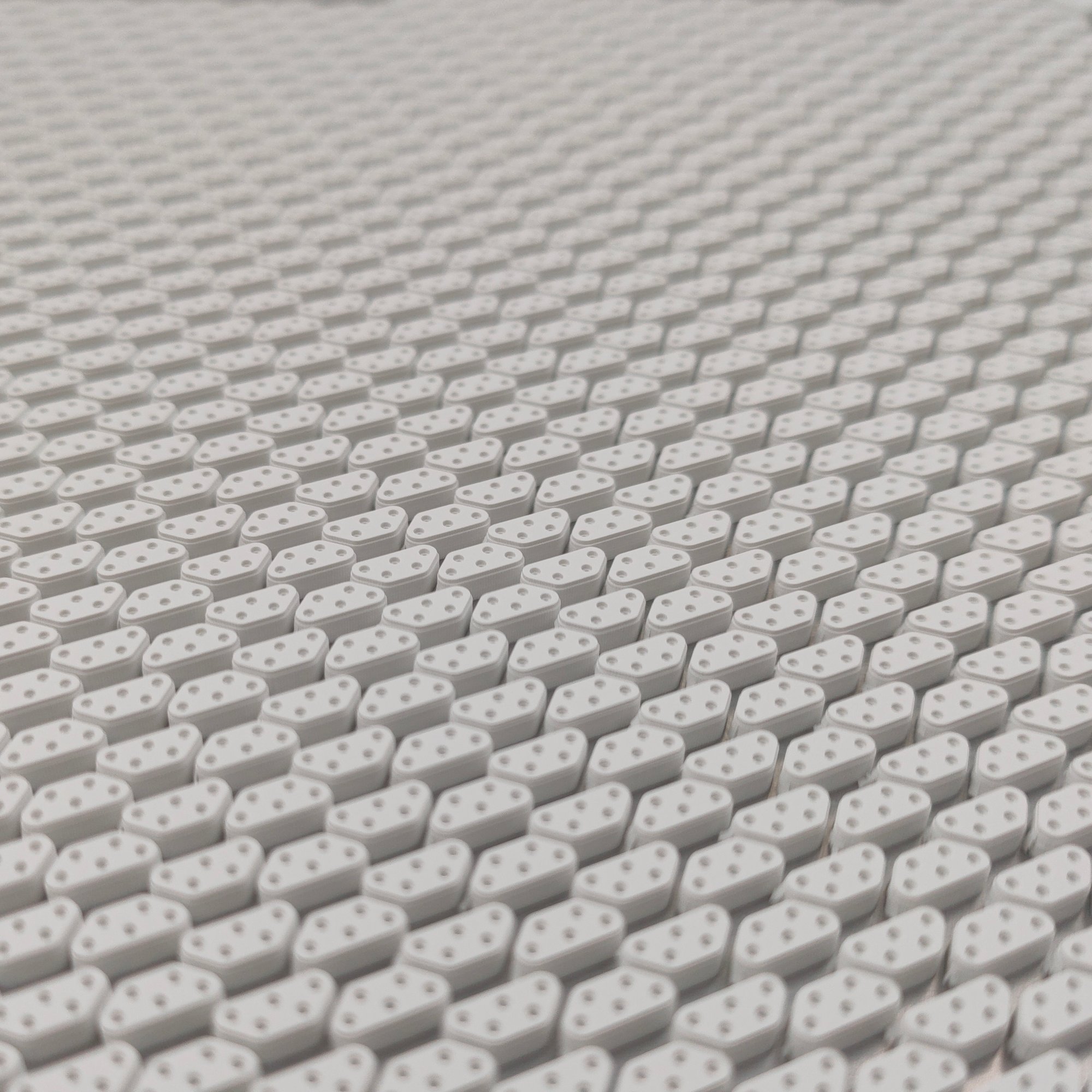
Ceramic feedthroughs: no post-processing needed
These tiny, 6 mm wide ceramic parts are used to securely position electrodes inside pacemakers. Traditionally, the parts would have required extensive post-processing. After manufacturing with additive screen printing, the ceramic parts already have the required surface quality of Ra 2 microns. There is no need for costly post-processing anymore.
Technical details:
- Part size: 6.2 x 3 x 1.4 mm
- Material: Aluminum oxide Al2O3
- Density > 96 %
- 2 different screens required for printing
- Production capacity: 84’000 pieces per 8h shift (5’100 pieces per screen)
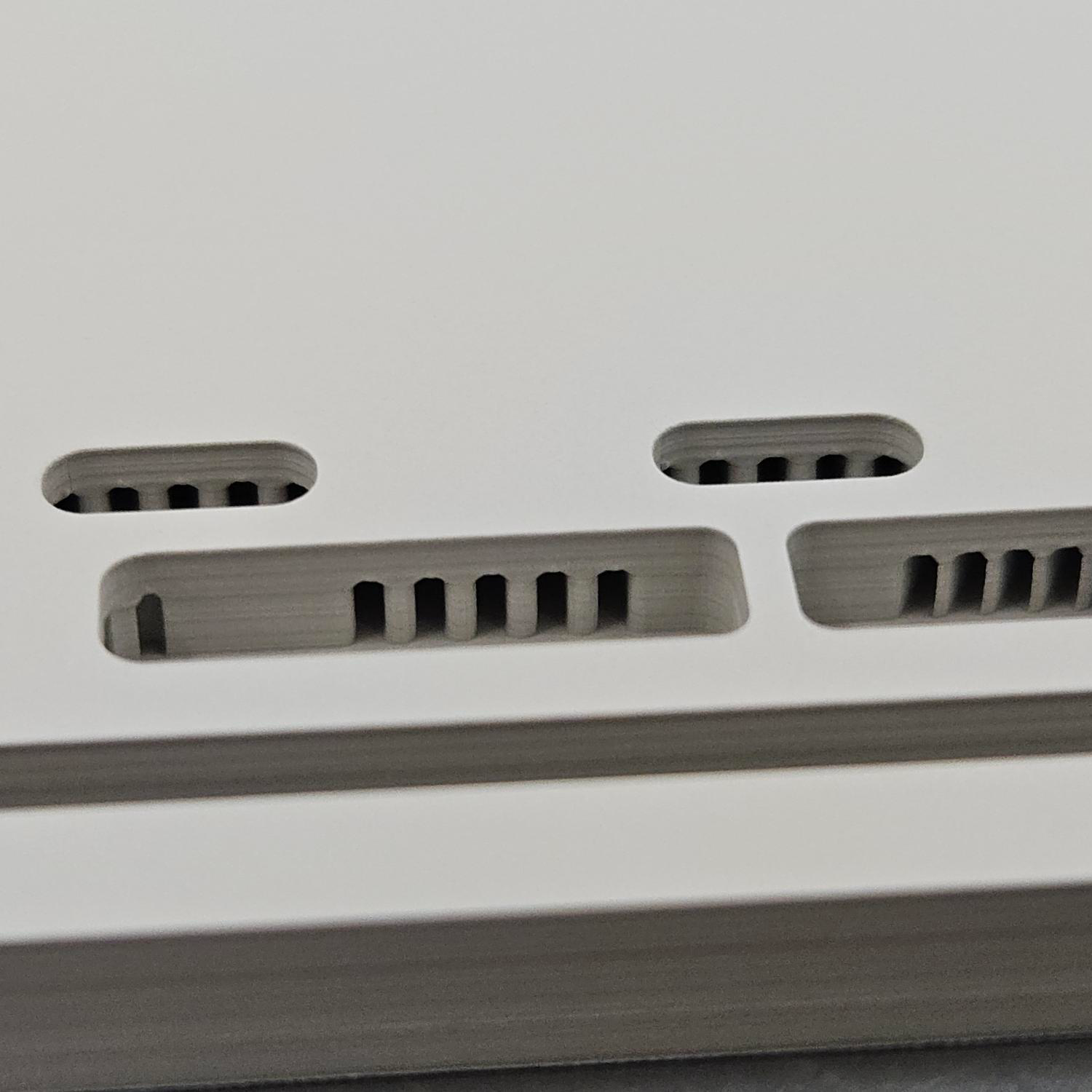
Thermal management: improved cooling structures
Manufacturing aluminum nitride with traditional technologies is expensive. Additionally, the design of channels within parts is limited.
With Exentis Additive Screen Printing, the customer gained the ability to optimize parts for performance in a way that was not possible before. Additive Screen Printing delivers full design freedom in X and Y axis. Furthermore, thinner walls up to 75 µm can be manufactured. Combined with more, denser channels, the performance of the cooling parts could be improved significantly at very attractive manufacturing costs.
Technical details:
- Part height: 2.5 mm
- Material: Aluminum nitride
- Parts per screen: 15
- Advantage: Attractive costs, design freedom
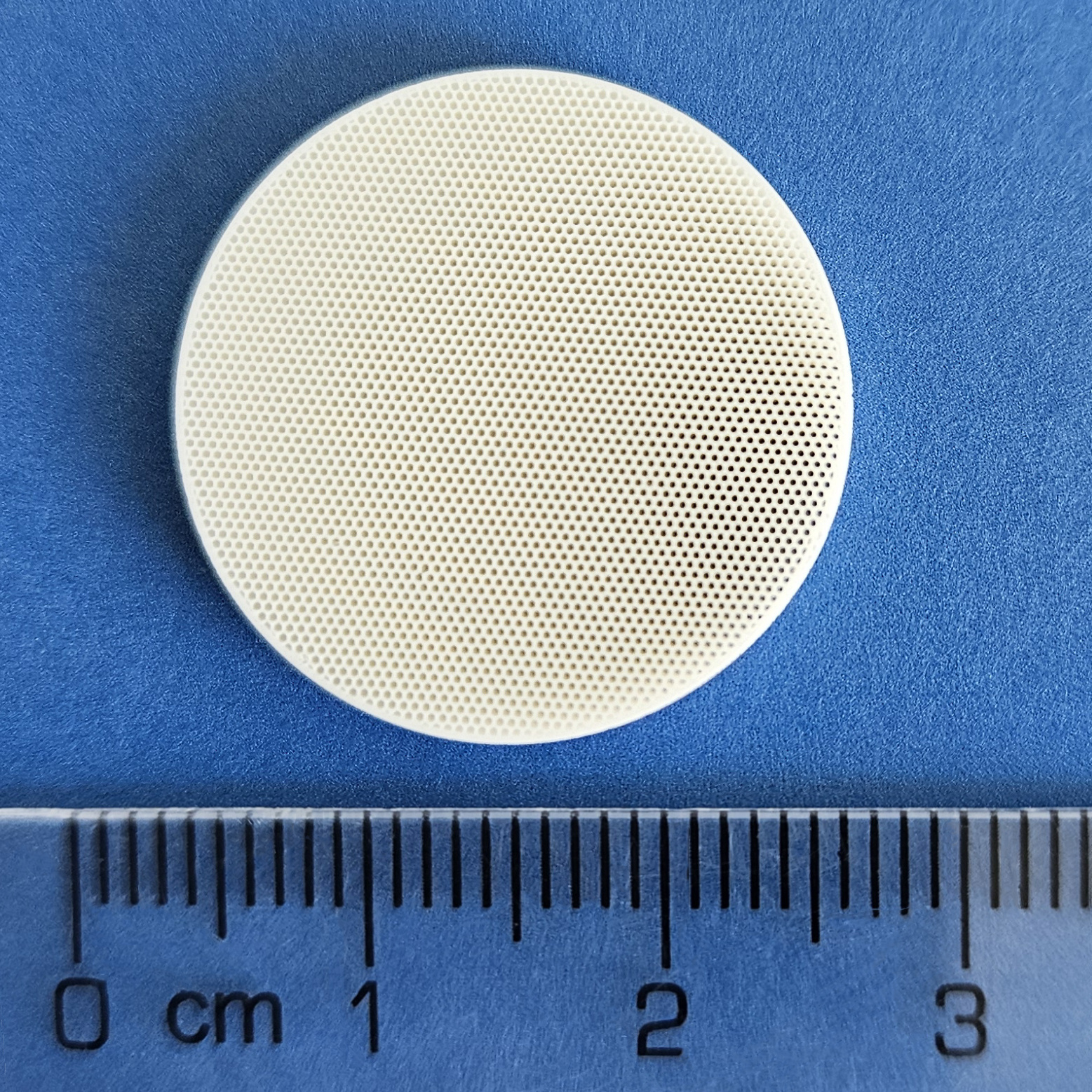
Micro-precision like never before
Look closer, this ceramic part contains a very large number of tiny channels. Exentis Additive Screen Printing Technology is redefining what’s possible in additive manufacturing. These structures can be incorporated into larger components with diameters up to 400 mm.
These ultra-fine structures enable a wide range of advanced applications such as flilters for precise fluid control and many more.
Why Additive Screen Printing Technology Stands Out

Million-scale manufacturing
Production capacity of more than 5 million parts on a single additive manufacturing production system per year. High building rate of up to 10,000 cm3/h.
Benefit: Lower cost, scalability & reliability.

Micro-precision
Channel width from 125 μm, wall thicknesses from 75 μm, surface quality with roughness levels 2 μm without post-processing.
Benefit: Enabling ultra-fine details that were previously impossible to produce.

Free choice of materials
The technology delivers parts made of technical ceramics, metals and metal alloys, graphite, custom and porous materials and many more.
Benefit: Maximum flexibility to optimize each component for performance, cost, and durability.
How 3D Screen Printing Works
Additive Screen Printing builds parts layer by layer using paste pushed through a screen onto a workpiece carrier. Only the material needed is applied, areas between parts are blocked on the screen by non-permeable fabric.
Layer thickness: 10–150 µm depending on part design and material. A short cycle time between 2–8 seconds and a high print volume of up to 10,000 cm³/h allows for large output.
The additive manufacturing technology is especially well suited to flatter parts with minimal z-axis variation. The z-axis is defined by the screen geometry.

Production systems for Additive Screen Printing
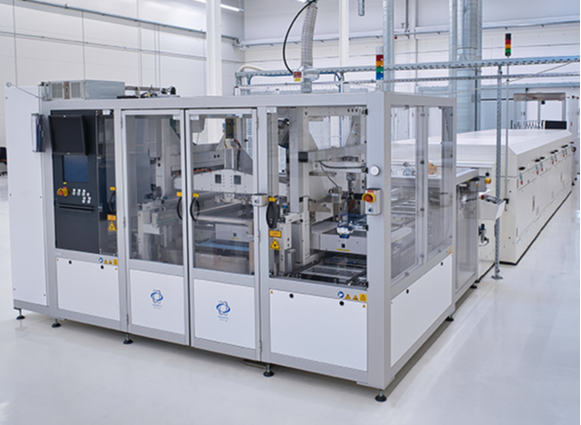
EX432i: High automation, up to 40 workpiece carriers, capable to produce more than 5 million parts on a production system per year.
EX431: Smaller production system for medium-scale series and developments.

Want to know more? Get in touch
Discover the potential of Additive Screen Printing for your ceramics project. Connect with our experts and unlock new possibilities for your production.